
DATACC BY DIME PROJECT
Defining core digital measures for
Pediatric rare disease research & care


Value framework: Positioning core measures as endpoints in disease-specific trials
This framework will help you position core digital measures as endpoints in disease-specific pediatric trials and integrate them into routine care. You’ll see where digital measures matter most across pediatric rare diseases research and care, and learn how to identify what matters to sponsors, developers, providers, regulators, payors/HTA, and, critically, patients and care partners.
VALUE FRAMEWORK
Stakeholder value of digital measures in pediatric rare diseases
 Patients & caregivers
- Shorten the time to diagnosis. Capture symptom patterns at home to point out important patterns earlier and steer genetics/referrals sooner.
- See progress in daily life. Track symptoms, function, sleep, mobility, and routines continuously at home to understand what’s changing – not just what’s visible at clinic visits.
- Catch problems earlier. Collect evidence of deterioration or safety concerns so you can act before small issues become emergencies.
- Personalize care plans. Share objective trends that help providers tailor therapies, dosing, rehab, and support to what matters most to your child.
- Catch condition-specific pre-exacerbation signatures. Surface early deterioration to start home treatments before emergency department visits.
- Show benefit when sample size is small. Use within-child baselines and dense sampling to demonstrate meaningful change where group stats are underpowered.
- Contribute to the community. Add your experience (privately through de-identified data) to research that can speed understanding and treatments for other families.
- Capture caregiver workload. Quantify night wakings, time on care tasks, and missed work/school to reflect true burden and support service eligibility. Quantify how much help a child needs for transfers, dressing, or feeding to show real gains in independence.
 Sponsors (Pharma & biotech)
- Amplify signal in small-N cohorts by leveraging high-frequency, at-home measures, reducing variance.
- Characterize trajectories in early childhood, including children who are non-verbal or have developmental limitations.
- Recruit globally with decentralized/hybrid designs suited to geographically dispersed families.
- Capture caregiver-mediated outcomes (e.g., functional assistance, sleep disruption) alongside sensor data.
- Support adaptive designs with interim digital readouts that guide dose or cohort adjustments.
- Make go/no-go decisions earlier by mapping disease trajectory and treatment response early.
- Strengthen submissions by presenting objective, high-frequency evidence to regulators.
- Accelerate time to market by using more sensitive digital outcome measures that detect change earlier.
 Hospital systems & providers
- Track progression and personalize care plans using continuous trends.
- Reduce in-person visits by shifting appropriate monitoring to the home.
- Improve accuracy with objective, high-resolution symptom data rather than recall.
- Coordinate and standardize care with centralized data that follows the patient across settings and visits across departments (neurology, rehab, primary care, mental health) that serve rare disease patients.
- Discuss shared data with families to co-manage goals and therapy adjustments between visits.
- Preserve scarce specialist time by focusing in-person care on high-risk signals flagged remotely.
- Triage efficiently and expose gaps in existing hospital tech stacks through interoperable digital inputs.
 Digital health technology developers
- Differentiate with pediatric-focused design that addresses comfort, size, safety, assent/consent, parental dashboards.
- Translate learnings across rare diseases where pathophysiology overlaps (e.g., mobility, sleep, seizures).
- Generate real-world data via beta pilots, proof-of-concepts, and structured user feedback.
- Improve accessibility and usability by learning directly from end users and clinical workflows.
- Validate existing DHTs/digital measures in new indications and populations, bridging/equivalence and responsiveness.
- Address a market gap where many DHTs target adults; tailor algorithms to pediatric norms and specifics of rare pediatric diseases.
- Accelerate market access for new therapies by supporting pediatric endpoints in indications lacking validated tools.
 Regulators
- Facilitate pediatric development when traditional endpoints are infeasible, unethical, or insensitive.
- Support extrapolation and modeling with dense, longitudinal data that augment limited sample sizes.
- Enable new endpoints that are impractical without digital technologies (e.g., continuous mobility, sleep).
- Standardize comparisons across programs with more consistent and objective measurement.
- Strengthen longitudinal understanding of disease course and treatment durability.
- Apply consistent criteria across small trials in a given rare disease to improve comparability.
 Payors/HTA bodies
HTA = Health technology assessment
- Support coverage in ultra-small populations with high-frequency evidence that reduces uncertainty.
- Monitor medically complex children at home to prevent costly admissions and ER visits.
- Quantify caregiver burden (sleep disruption, time on care tasks) to reflect the total cost of care in pediatrics.
- Predict deterioration earlier to improve outcomes and avoid downstream costs.
- Operationalize value-based contracts using objective, longitudinal outcomes from routine monitoring.
- Rely on accessible digital data for more consistent, transparent assessments and fewer “flexible” endpoints.
For Landry, a boy with Duchenne muscular dystrophy, participating in research used to be an exhausting endeavour. He and his family would travel to clinics for rigid assessments like the six-minute walk test – a simple walking test evaluated by a clinician. Hospital visits were stressful and tiring, and most of the tests conducted failed to capture how Landry actually moved, played, or rested in his daily life.
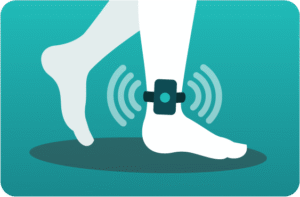
A recent pilot study changed this dynamic by replacing clinic visits with remote monitoring through a simple ankle sensor. Landry could go to school and play at home freely, while the device quietly analyzed his natural movements. This approach removed the stress of traveling to the clinic and rigid testing by successfully measuring meaningful improvements in how fast he could walk and run during his daily life.
The data allowed researchers to see if his maximum stride speed was improving over time – a key indicator that the new gene therapy for Landry would slow or reverse the disease progression.