
DATACC BY DIME PROJECT


CONCEPTUAL MODEL


This conceptual model is a practical map of where digital measurement can meaningfully capture symptoms, functioning, and lived experience in mental health. Built through a Delphi process with 26 experts and a structured literature synthesis spanning clinical research, patient perspectives, and disorder-specific expertise.




| Clinical documentation & phenotype ontologies | Digital measurement & domain specific ontologies | Data interoperability | Databases, tools & resources |
|---|---|---|---|
| Diminished mental health (HPO) Atypical behavior (HPO) Finding of a physical location of a patient (SNOMED) Instrumental activity of daily living (SNOMED) | DiMe: Sleep regularity index | IEEE 11073 Personal Health Device (PHD) OASIS Standard: Classification of Everyday Living | GLOBEM Dataset |
| Clinical documentation & phenotype ontologies | Digital measurement & domain specific ontologies | Data interoperability | Databases, tools & resources |
|---|---|---|---|
| Cognitive impairment (Human Phenotype Ontology) activity of daily living (SNOMED) | Cognitive Atlas (COGAT)Cognitive Paradigm Ontology (CogPO)NeuroPsychological Testing Ontology (NPT)Neurocognitive Integrated Ontology (NIO) | NIH toolbox |
| Clinical documentation & phenotype ontologies | Digital measurement & domain specific ontologies | Data interoperability | Databases, tools & resources |
|---|---|---|---|
| Physical activity finding (SNOMED)Lack of sufficient daily physical activity (Human Phenotype Ontology) | DiMe: Core measures of physical activityPhysical Activity Ontology (PACO) | IEEE Standard for Open Mobile Health Data—Representation of Metadata, Sleep, and Physical Activity Measures | PROMPT Study |
| Clinical documentation & phenotype ontologies | Digital measurement & domain specific ontologies | Data interoperability | Databases, tools & resources |
|---|---|---|---|
|
Sleep disturbances (Human Phenotype Ontology)Findings related to sleep (SNOMED) |
DiMe: Core measures of sleepAASM Manual for the Scoring of Sleep and Associated Events | IEEE Standard for Open Mobile Health Data—Representation of Metadata, Sleep, and Physical Activity Measures | World Sleep Society Recommendations consumer devices NSRR (National Sleep Research Resource)PROMPT Study |
| Clinical documentation & phenotype ontologies | Digital measurement & domain specific ontologies | Data interoperability | Databases, tools & resources |
|---|---|---|---|
| OLiA (Ontologies of Linguistic Annotation | ISO 24612:2012 Language resource management — Linguistic annotation framework (LAF)Emotion Markup Language (EmotionML)ISO/IEC 14496‑2 (MPEG‑4 Part 2) | Consensus-Based Definitions for Vocal Biomarkers: The International VOCAL InitiativeThe Process to Identify a Vocal BiomarkerMethodological framework for collection and analysis of repeated speech samplesTalkBankBridge2AI |
| Clinical documentation & phenotype ontologies | Digital measurement & domain specific ontologies | Data interoperability | Databases, tools & resources |
|---|---|---|---|
| Heart Rate VariabilityHeart Rate Variability: Standards of Measurement, Physiological Interpretation, and Clinical UsePublication guidelines for HRVGuideline for Electrodermal ActivityVital sign ontology | IEEE 11073 Personal Health Device (PHD) | WESADPROMPT Study |
| Clinical documentation & phenotype ontologies | Digital measurement & domain specific ontologies | Data interoperability | Databases, tools & resources |
|---|---|---|---|
| Facial Action Coding System (FACS)ibug 68 facial point standard | ISO/IEC 14496‑2 (MPEG‑4 Part 2) | OpenFaceMinimal reporting guideline for research involving eye tracking (2023 edition) |
We welcome your expertise. If you have a resource or ontology to recommend for inclusion, please reach out to our team.
Real-world applications of digital measures for CMHD
Meaningful aspects of health and digital measures of CMHD provide clinical development programs with a strong foundation by enabling the capture of treatment effects and patients’ experiences more continuously and at a finer level of detail across shared symptoms. They can reduce technical failure rates in clinical development programs and shorten the path to market. The digital measures set can establish detailed digital phenotypes that move beyond the disease-based model and may enable more precise subtyping of mental health conditions in pre- and post-market settings.
These examples detail how the digital measures can be applied across different common mental health disorders.

Proposed protocol to capture speech and language changes in a schizophrenia clinical trial, including data and metadata collection strategies

Physical activity and sleep measures used for longitudinal assessment of depression and anxiety symptoms
33
Reviews from
690
Assessed articles

38
Countries

Age range: 9-80 years old
Study sample size: 52 – 1695 participants

76.5% Lived-experienced individuals
2.9% Caregiver
20.6% Both
SURVEY

A Delphi-informed process used iterative rounds of consensus-building to define the set of digital measures for CMHD.
REPORT
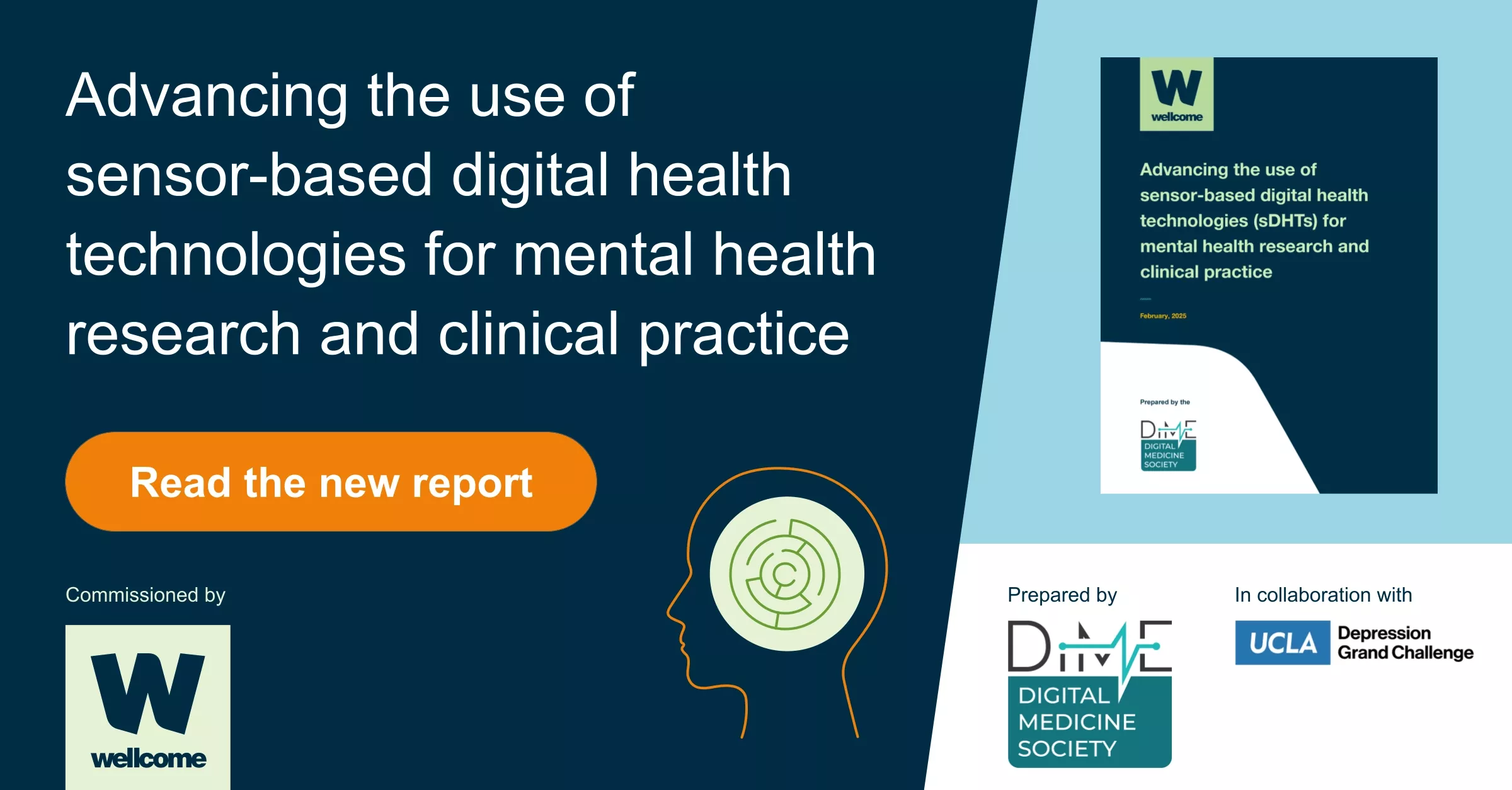
This report’s foundational research established the technical groundwork for sDHT development and use in mental health.